Rubber-Plastic Compound Line · Featured

Auto Feeding & Weighing Scale Conveying System

Formula automatic conveying and weighing — the system that decides whether every batch you mix is actually the batch you specified.

Materials are drawn from storage by negative-pressure conveying or fed from FIBC jumbo bags, weighed to formula, and held in tank. The PLC waits for the discharge signal from your internal mixer or kneader, drops the batch, and starts the next cycle.

The operator never touches the compound — so the batch does not drift, the dust stays in the system, and the recipe you wrote is the recipe that gets mixed.

PAXTON serves as overseas agent for SongXing Automation, and engineers the system into the plant — the layout, the building height, the mixer interface, the commissioning.

Quick Facts
Main material accuracy± 0.2 – 0.5% F.S.
Minor ingredient accuracy± 0.2% · ± 2 g under 1,000 g
Configuration2 feeders / 1 scale → 30 feeders / 15 scales
OutputApprox. 500 – 1,380 bags per day
FeedingVacuum conveying · FIBC bag · manual
ConveyingScrew · vibration · liquid flow meter
ControlPLC + HMI, PC central system
IndustriesRubber, plastic, chemical, food, medicine, energy, textile
Before you specify anything

Three weighing methods. The choice is a trade-off.

There is no single best configuration. Accuracy, cycle time and the height of your building pull against each other — and the right answer depends on the plant you actually have.

Weighing Method Comparison
  Vacuum conveying
& screw weighing
FIBC bag feeding
& screw weighing
Vacuum conveying
& weighing
Plant height required Approx. 7 m above discharge port 7 – 20 m, depending on mixer size 3 – 5 m above discharge port
Accuracy ± 0.2 – 0.5% F.S. ± 0.2 – 0.5% F.S. ± 0.2 – 1% F.S.
Cycle 30 – 100 kg/min 30 – 100 kg/min 15 – 30 kg/min
Advantage High accuracy and stability; saves plant height; good dust control High accuracy and stability Saves plant height; good dust control

Read it this way: if your building has 5 metres of headroom above the mixer, you can still automate — but you accept ±1% instead of ±0.2%, and a slower cycle. If you need ±0.2% at 100 kg/min, you need the height. That is the conversation to have before you build, not after.

Two systems, one line

Main materials and minor ingredients are different problems.

Main Material System
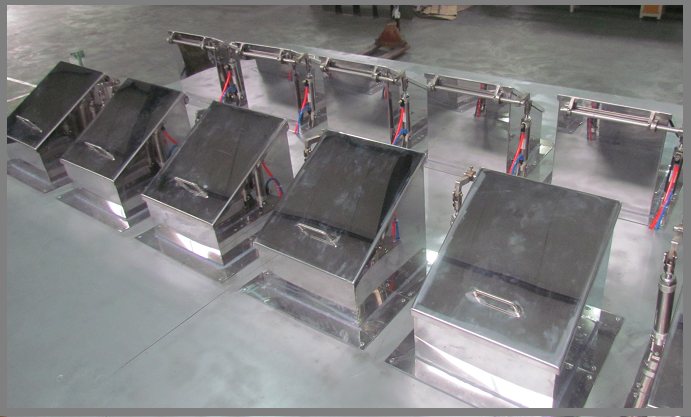
Material storage tanks feeding the weighing units

Carbon black, oils, polymer, fillers — the bulk of the batch. Conveyed by negative pressure or from FIBC, weighed, stored in tank, discharged on the mixer’s signal.

  • ± 0.2 – 0.5% F.S. on single material
  • Stainless steel containers with bridge-breaking device — powder that arches will not weigh correctly
  • PLC-controlled feeding speed — fast fill, slow finish, for stability at the cut-off

Minor Ingredient (Small Chemical) Scale
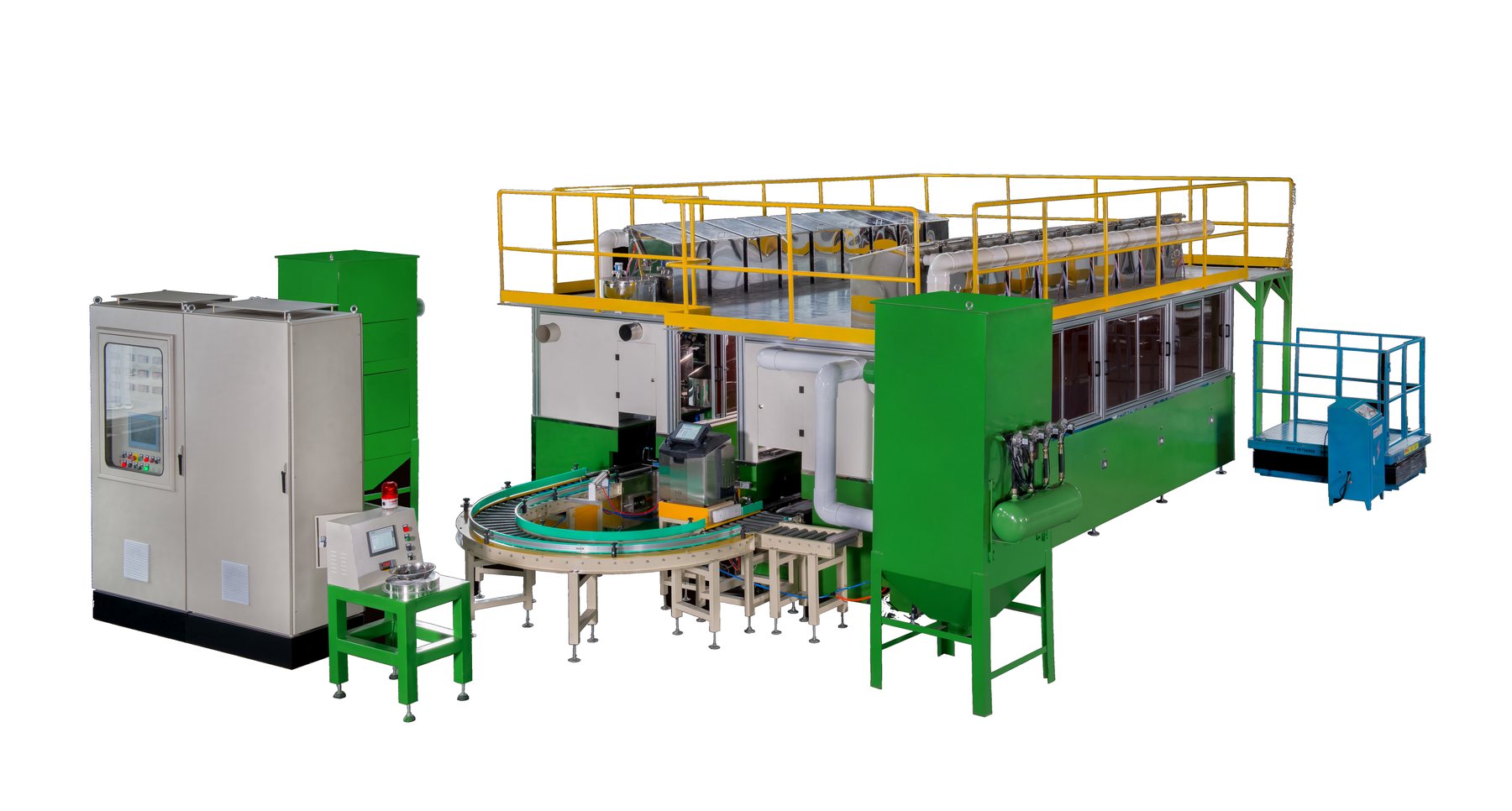
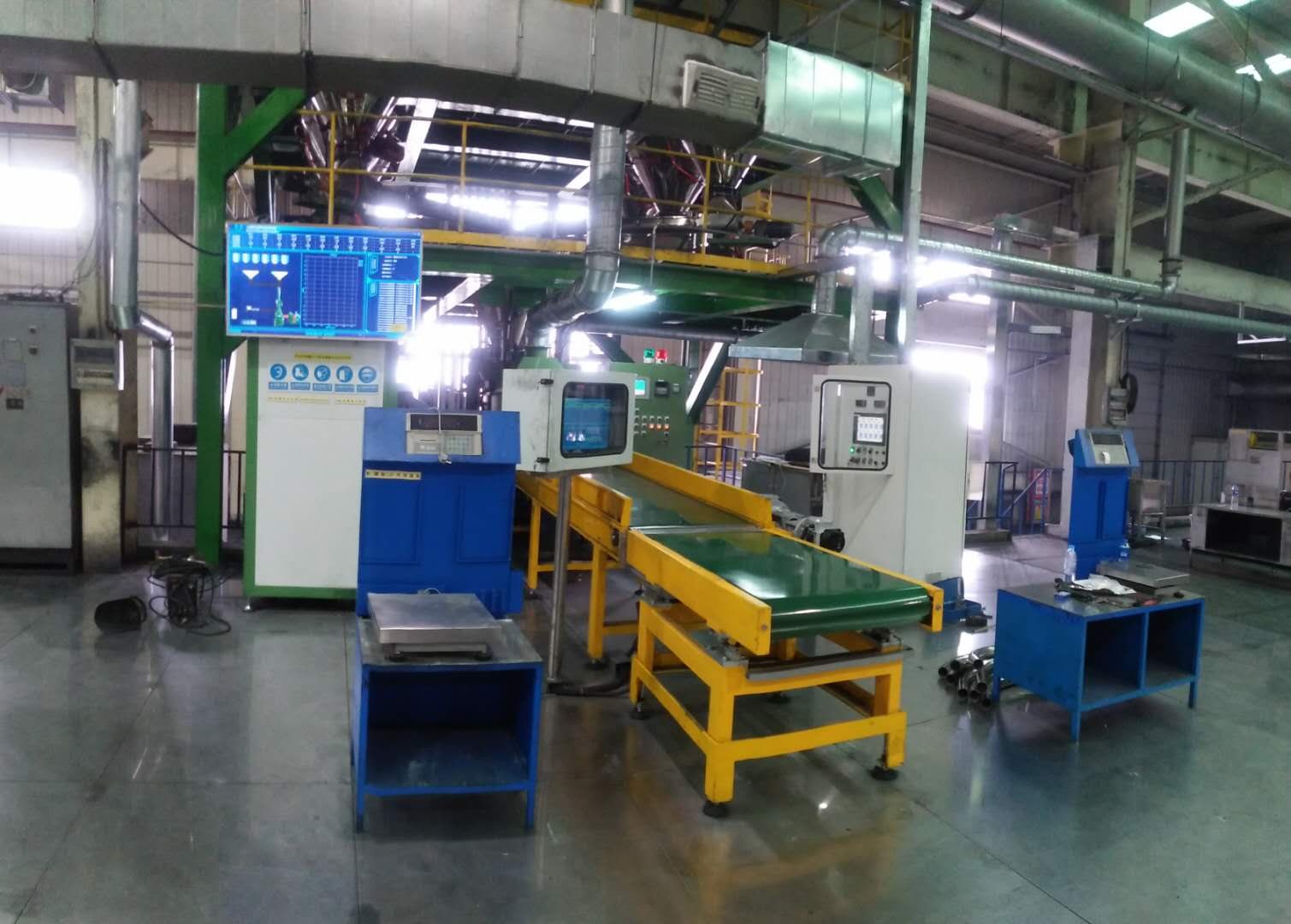
Automatic minor ingredient weighing system with rotary conveying belt

Accelerators, sulphur, activators — small quantities where a two-gram error changes the cure.

  • ± 0.2% on single material; ± 2 g under 1,000 g
  • 2 feeders / 1 scale to 30 feeders / 15 scales — 500 to 1,380 bags per day
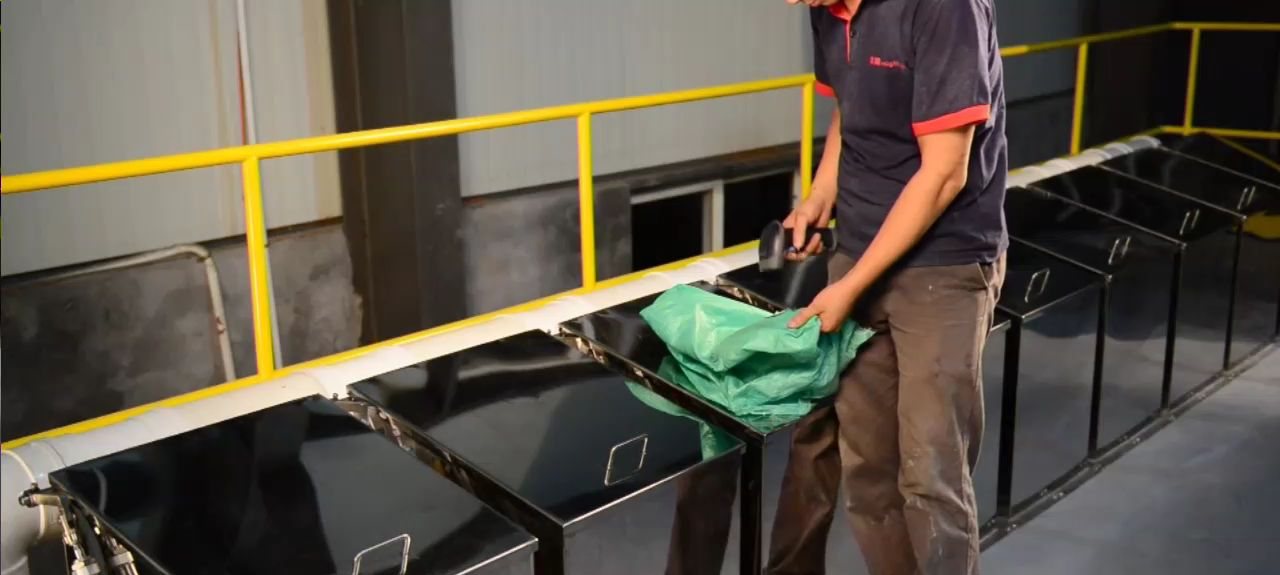
  • Wireless barcode scanner with alarm — every sack is scanned before it goes in; the wrong material cannot enter the batch

Accuracy varies with ambient conditions, material properties and humidity.
Engineering & control

Designed into the plant, not dropped into it.

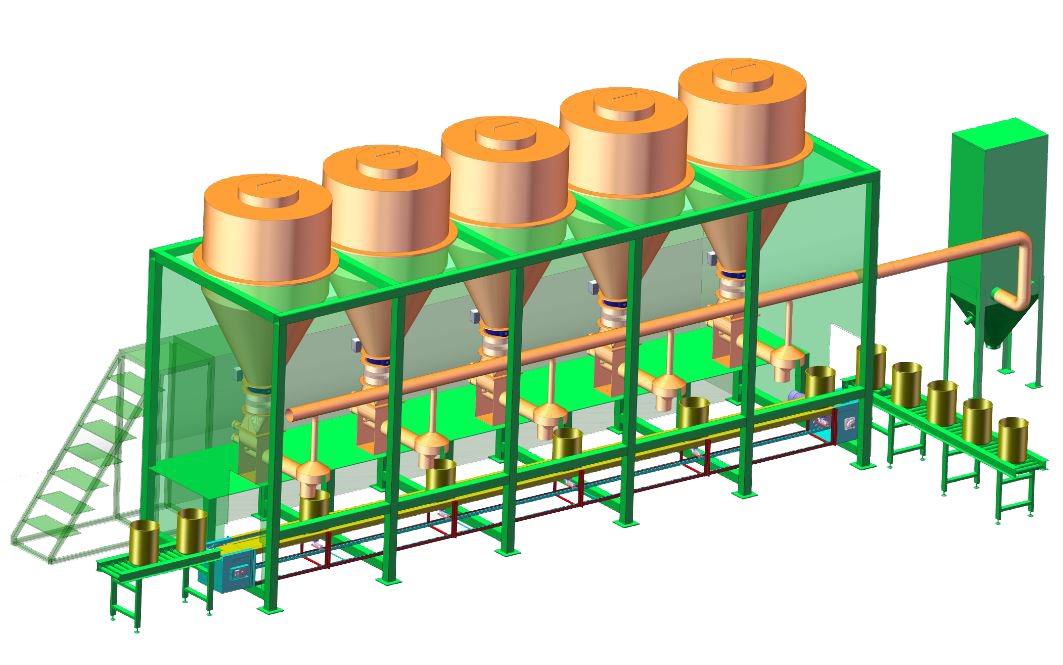
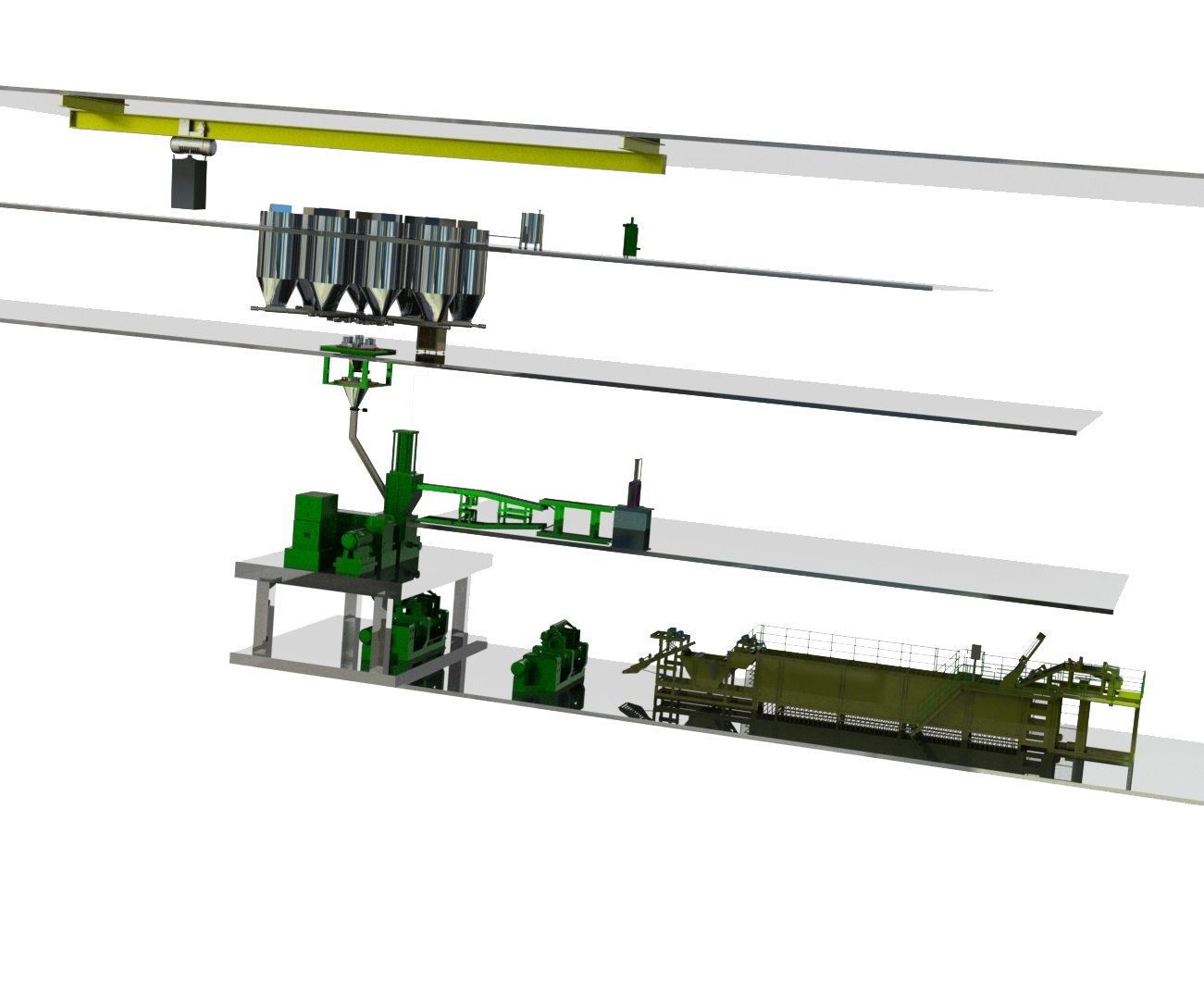
Every installation is laid out in 3D before anything is fabricated — tanks, conveying runs, platform steel, mixer interface, clearances.

System layout: multiple parallel weighing and mixing lines
Five feeders, five scales configuration

PC Intelligent Production System. The HMI runs the machine — formula, batch, feeding speed, consumption, alarms. Above it, the PC system runs the plant: connected to the PLC, it pushes formulas and work orders down to the line, logs production data to a database as it happens, and reports material consumption for any period on a live shop-floor dashboard over your own network.

Photo Gallery

Installed and running.

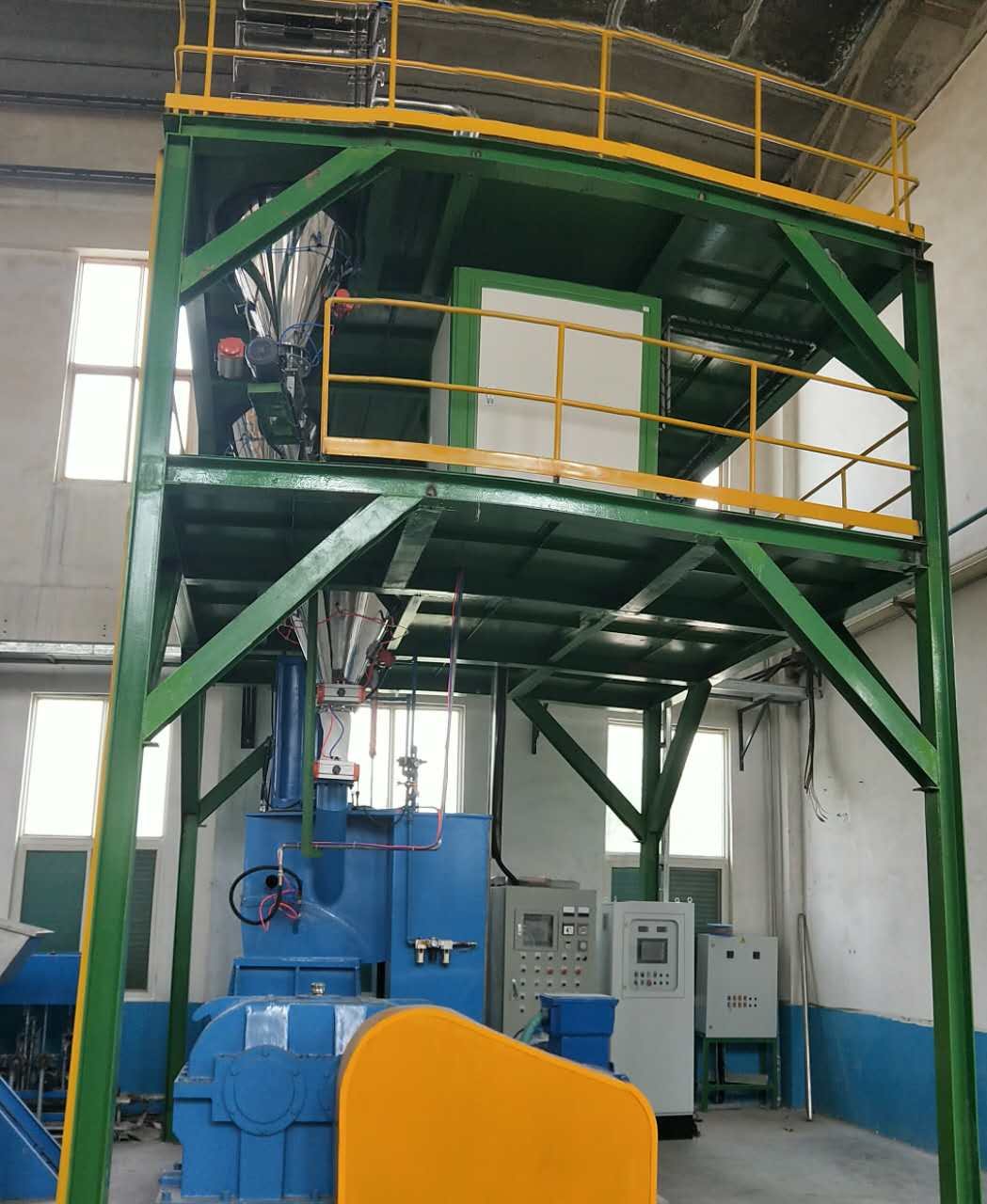
Weighing system installed above an internal mixer
Weighing and conveying system installed above a dispersion kneader
Operator scanning a material sack barcode before it enters the weighing hopper
After it is running

Remote diagnostics.

A weighing system that stops is a production line that stops. Where the PLC or HMI has network access, our engineers connect directly, read the fault, and work it through with your people — in the same session, not after a site visit is arranged.

Response within 24 hours, and not limited to Taiwan office hours. Where the system is not networked, we work from your photographs, screen recordings and alarm codes, or guide your operators by video call.

Network access for the control system is worth deciding at the planning stage. If you are specifying a new line, tell us and we will build it in.

Remote Diagnostics
RequirementPLC / HMI with network access
MethodDirect connection to PLC or control PC
ResponseWithin 24 hours
HoursNot limited to Taiwan office hours
FallbackPhoto / recording / alarm code review, or video call

Send us three numbers.

Your target batch size, the number of materials in your formula, and the clear height above your mixer’s discharge port. With those three, we can tell you which weighing method fits.