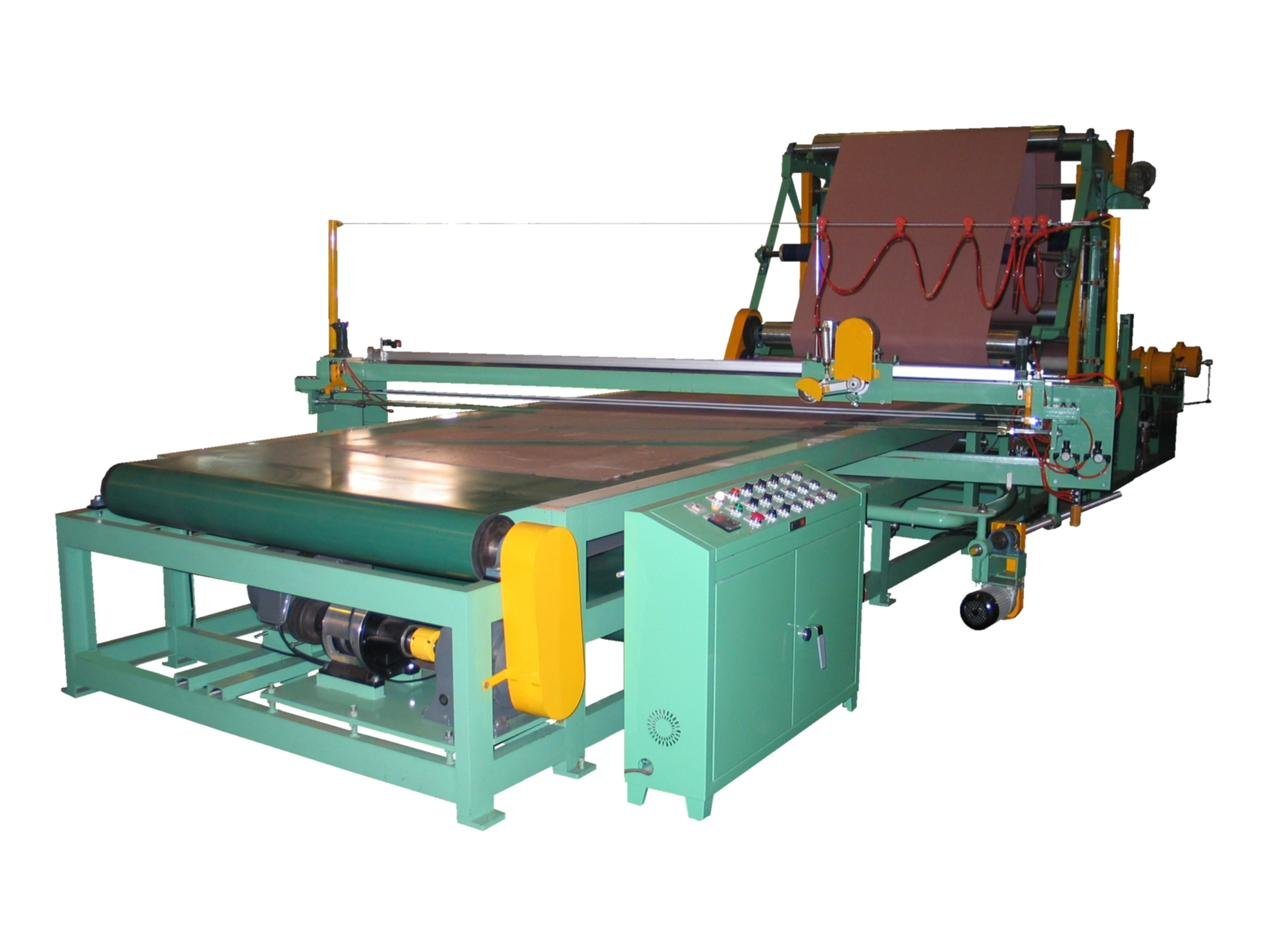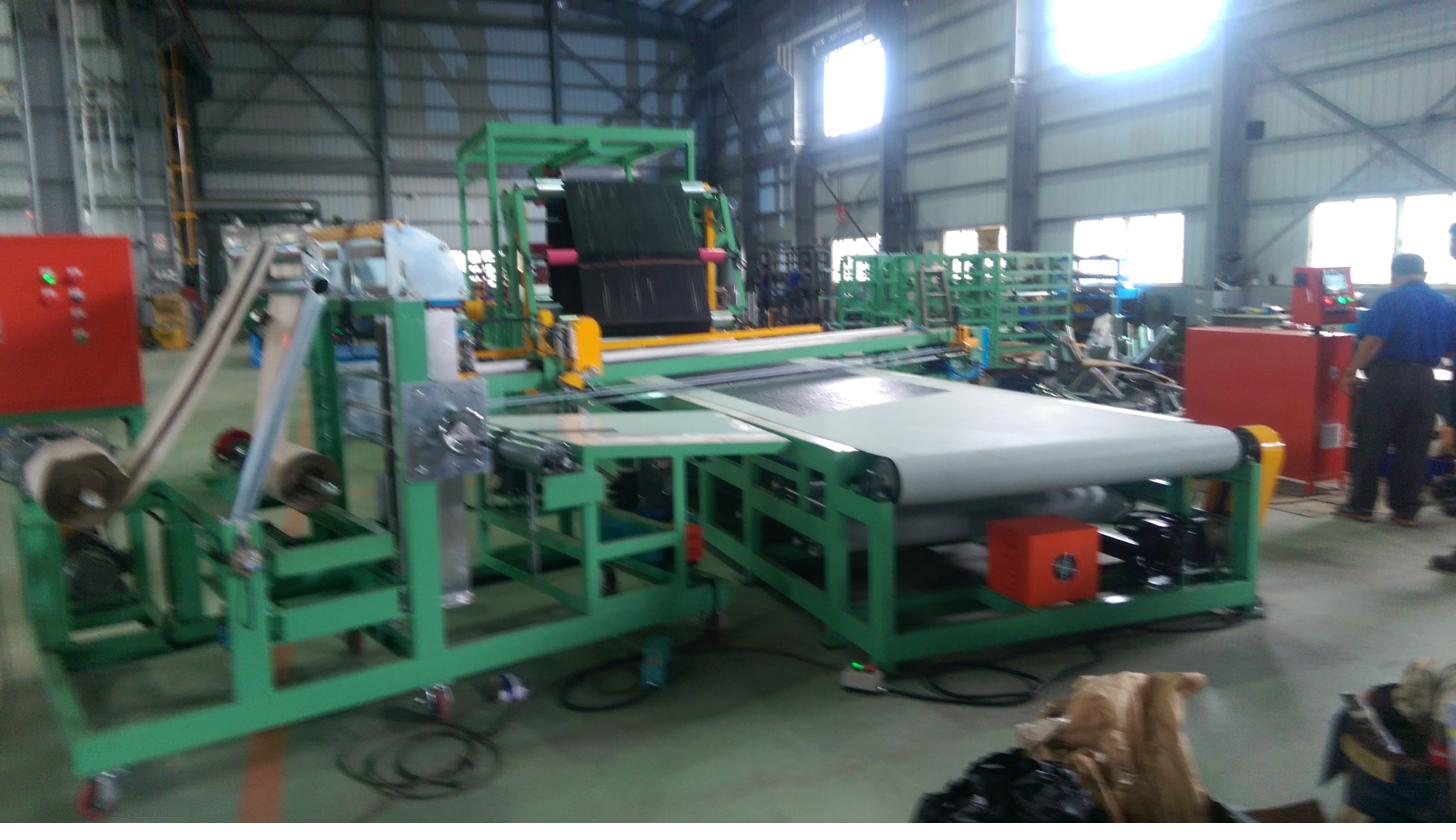
Cuts rubberized cord fabric to angle, then winds it — the stage between the calender and the tire building drum.

Cord fabric leaves the calender as a continuous roll with all the cords running lengthwise. It cannot be built into a tire that way. The bias cutter cuts it across at an angle — typically 45° — so the plies can be laid up in a cross pattern, which is what gives a bias-ply tire its strength.
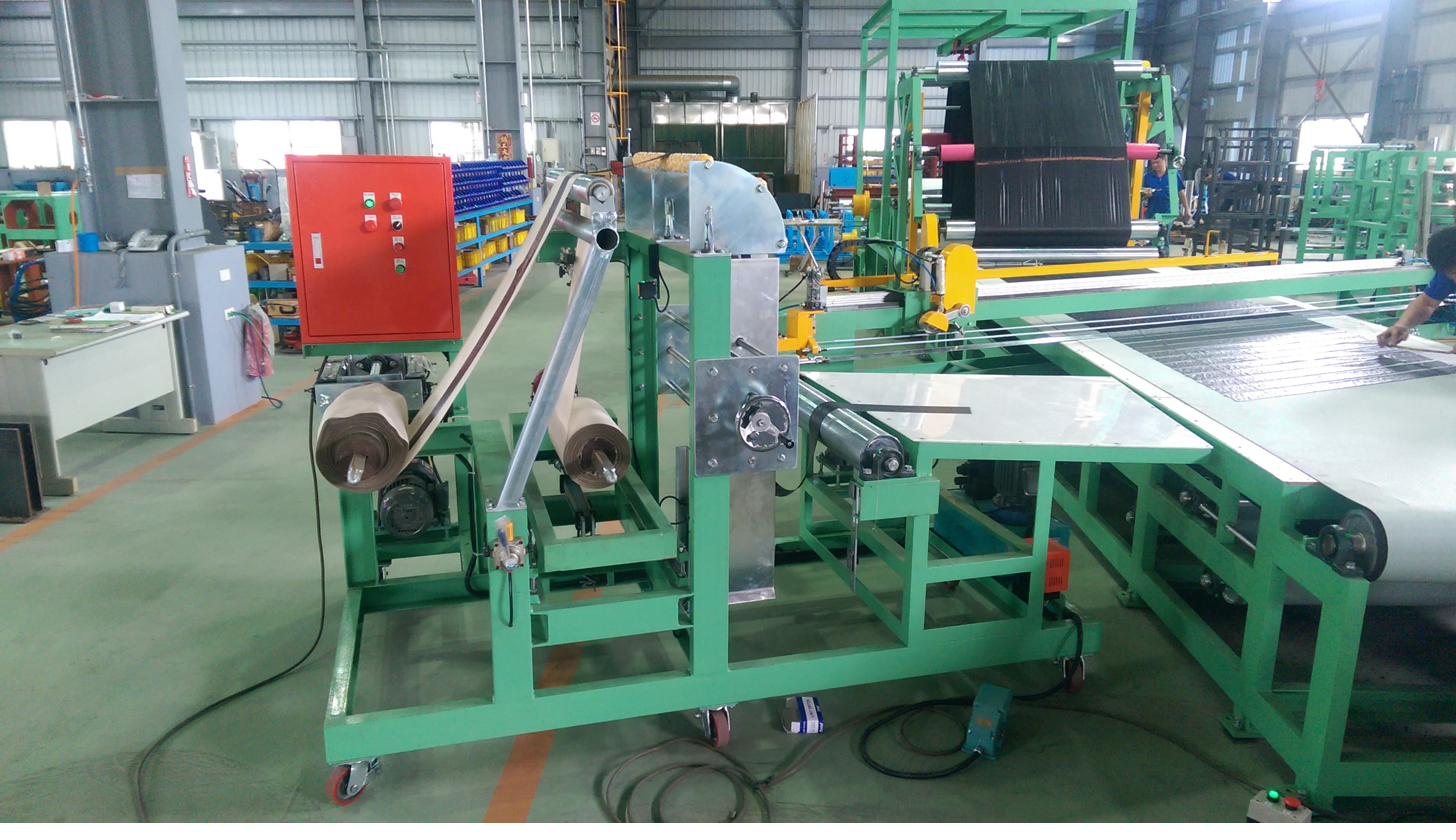
The cut sections then go to the winding machine, which winds them with a liner into a reel ready for the building drum.
| Type | Horizontal, with winding unit |
| Cutting angle | 35° – 90°, motorized adjustment |
| Max. fabric width | 1,600 mm (63″) |
| Cutting width | 50 – 2,000 mm |
| Accuracy | ±1.0 mm standard · ±0.5 mm with servo |
| Conveyor speed | Up to 50 m/min |
| Item | Specification |
|---|---|
| Suitable tire type | BC, MC, SC, IC, AG, ATV, PC, LT, TB |
| Max. bias width | 1,600 mm (63″) |
| Max. bias reel diameter | Ø 1,200 mm (Ø 47″) |
| Conveying belt width | 1,625 mm (64″) |
| Conveyor bed width | 1,800 mm (71″) |
| Cutting angle range | 35° – 90° (1/2 HP × 4P × 1/20 gear reducer motor) |
| Cutting width range | 50 – 2,000 mm (digital length controller) |
| Max. conveyor speed | 50 m/min |
| Reel installing type | Spindle raid installing mechanism |
| Reel spindle | Square type □ 32 mm |
| Reel motor | 3 HP × 4P induction |
| Conveyor motor | 1.5 kW × 4P induction (change poles 0.5 kW × 12P) |
| Cutting rail way | Linear guide rail 3,000 mm; H-type steel beam 3,800 mm |
| Cutting driver | Rodless air cylinder Ø 32 mm × 3,000 mm |
| Air supply | 4 – 8 kgf/cm² (with air storage tank) |
| Power supply | AC 220 / 380 V × 50/60 Hz × 3Ø |
| Overall dimensions | 10,500 × 3,400 × 2,700 mm (L × W × H) |
The cut fabric is tacky and cannot simply be stacked. The winding unit takes the bias-cut sections off the conveyor and winds them with a liner onto a reel, so the plies arrive at the building drum flat, separated, and in order.
The winding machine is supplied together with the cutter as one line. Let-off and wind-up configuration is specified to the fabric and the building machine downstream.
The cord calender tops the fabric with rubber. The bias cutter cuts it to angle. The tire building machine lays the plies onto the drum. Three machines, one continuous handoff — and a mismatch at any one of them shows up in the finished tire.