Rubber-Plastic Compound Line

Compound Line

The mixing heart of the plant. Internal mixers and dispersion kneaders, sized by batch capacity and matched to the downstream mill, batch-off and weighing equipment that surrounds them.

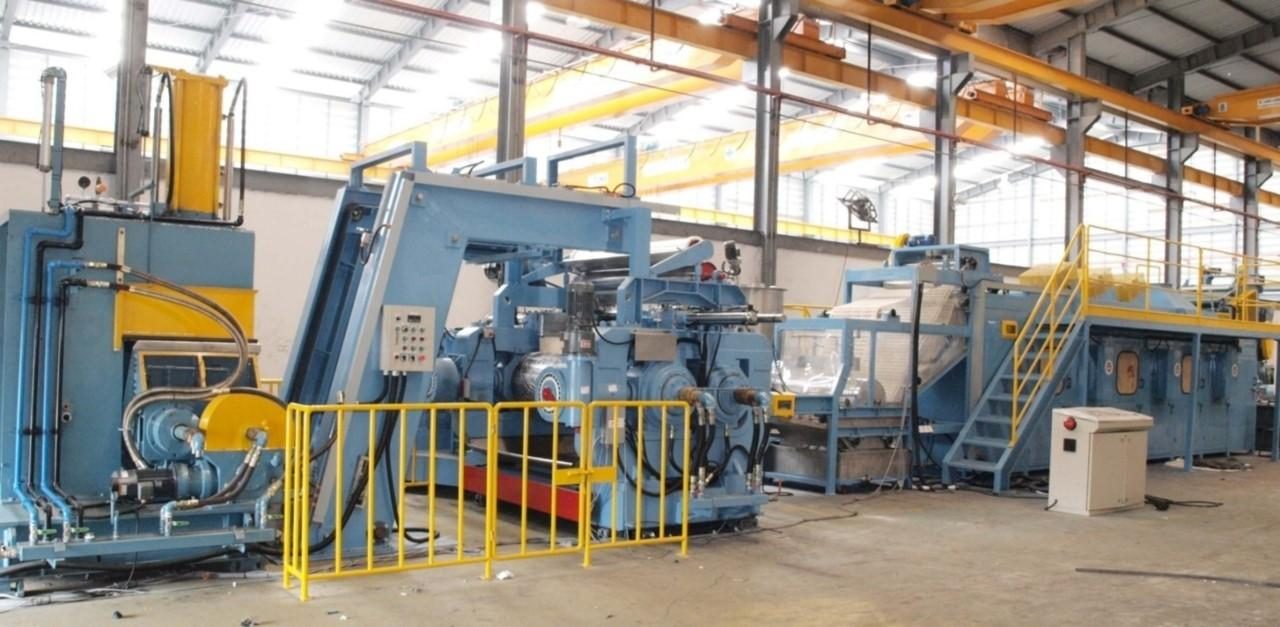
Complete compounding line: dispersion kneader, open mixing mill and batch-off conveying

A compound line is not one machine. Raw polymer, fillers, oils and chemicals are weighed, dropped into a mixer, worked until the batch is homogeneous, then discharged to an open mill and cooled into sheet or strip for the next stage.

PAXTON supplies the mixing stage in two forms — internal mixer for high-throughput batch mixing, and dispersion kneader where dispersion quality and colour changeover matter more than raw volume — and plans the equipment around them so the line runs as one system.

Quick Facts
Mixing stageInternal mixer or dispersion kneader
Capacity range75 – 180 L
Temperature controlAutomatic
UpstreamAuto feeding & weighing system
DownstreamOpen mixing mill, batch-off cooling
MaterialsRubber, synthetic rubber, EVA, PVC and compounding chemicals
01

Internal Mixer

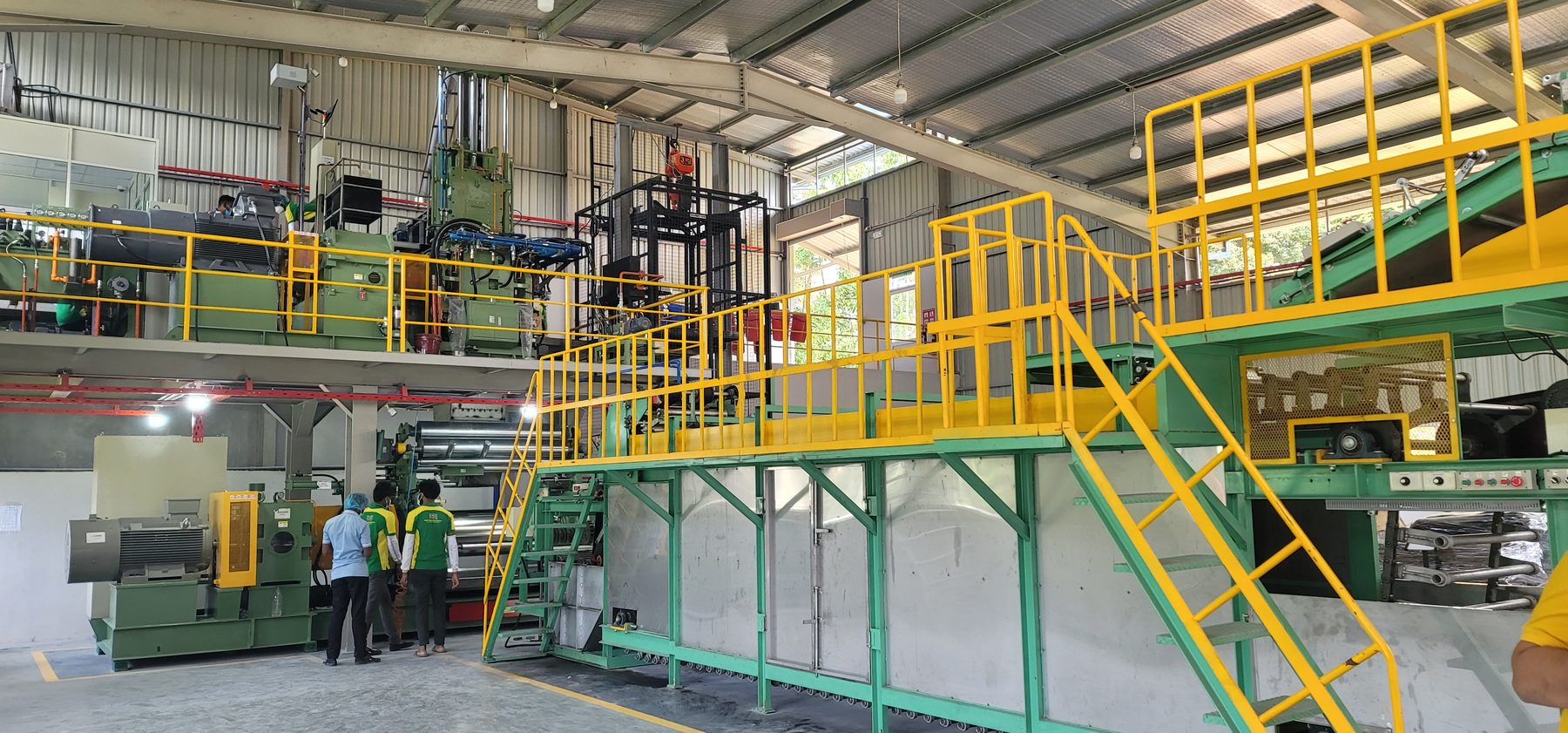
Internal mixer installed on an upper deck, discharging to the mill and batch-off line below
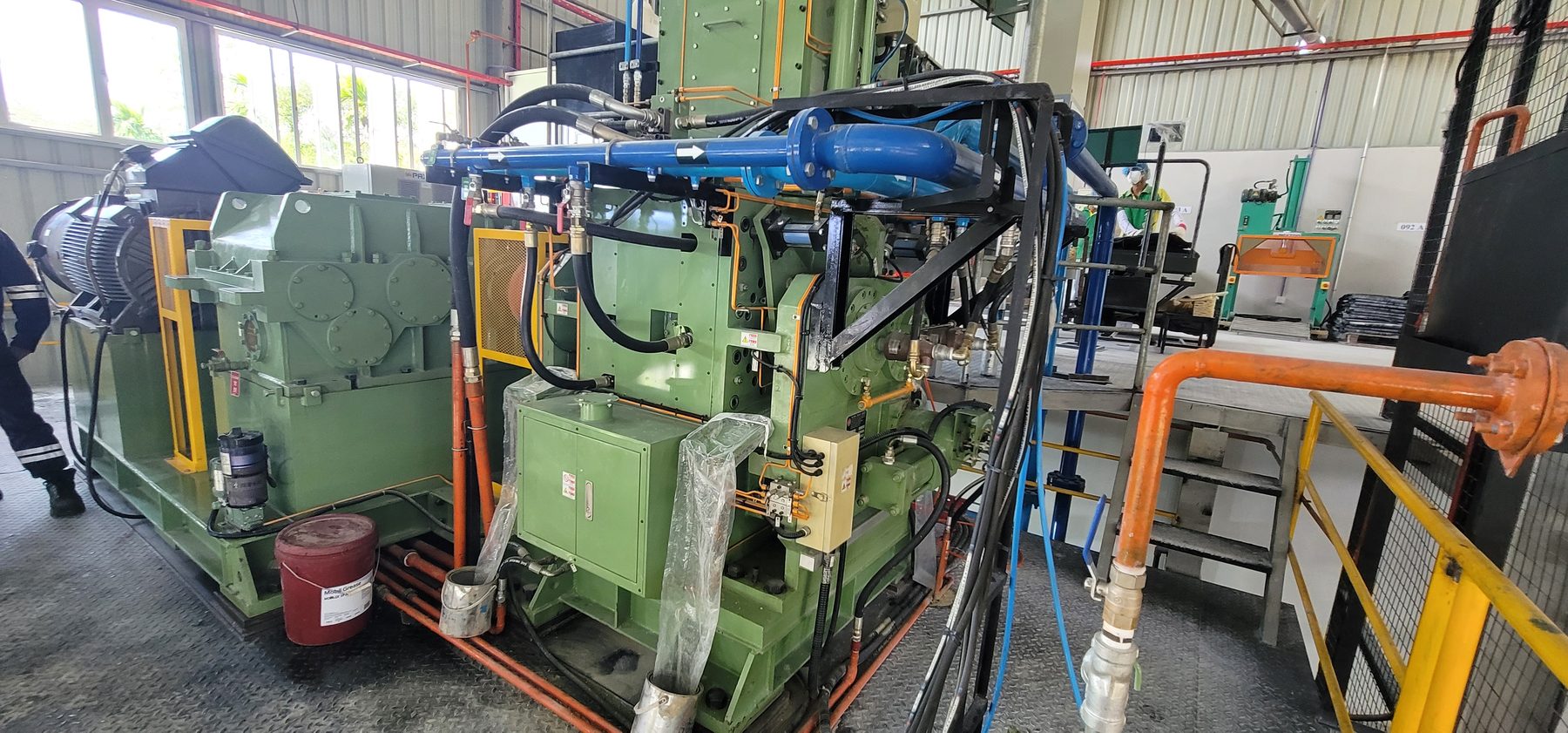
Internal mixer drive, gearbox and hydraulic ram detail

A Banbury-type internal mixer: two rotors turning in a sealed, water-jacketed chamber, with a hydraulic ram pressing the batch down onto them. Shear does the work — the compound is masticated and the fillers dispersed in a matter of minutes, with the batch never exposed to the room.

Mixers are usually installed on a raised deck and discharge straight down onto an open mixing mill, which sheets the batch out and feeds the batch-off cooling line.

Specification — Internal Mixer
ModelChamber VolumeMain MotorRotor Speed
PX-BM-7575 L200 HP32 / 36 rpm
PX-BM-100100 L400 HP10 – 40 rpm
PX-BM-180168 L1,066 HP10 – 60 rpm

Model number refers to nominal size; chamber volume is the actual working volume. Rotor speed can be specified as single-speed, two-speed or variable, with synchronous or non-synchronous rotor geometry to suit the compound. Larger chambers and other capacities can be quoted on request.

Construction

  • Mixing chamber — twin water jackets on the chamber halves for heating or cooling
  • Rotors — hollow, water-cooled, with hard-facing on the blade tips to resist wear
  • Seals — hydraulically self-adjusting, fed by a multi-point high-pressure lubricator
  • Ram cylinder — cast or fabricated, with internal guides to hold the long stroke true
  • Reduction gear — fully enclosed, single input / twin output heavy-duty unit

Control

  • PLC + HMI — manual, semi-automatic and fully automatic modes
  • Recipe control — process conditions logged, live trend charts, remote monitoring
  • Ram options — pneumatic, or hydraulic servo for closed-loop ram pressure
  • Cooling — low-temperature mixing to avoid scorch on heat-sensitive compounds
02

Dispersion Kneader

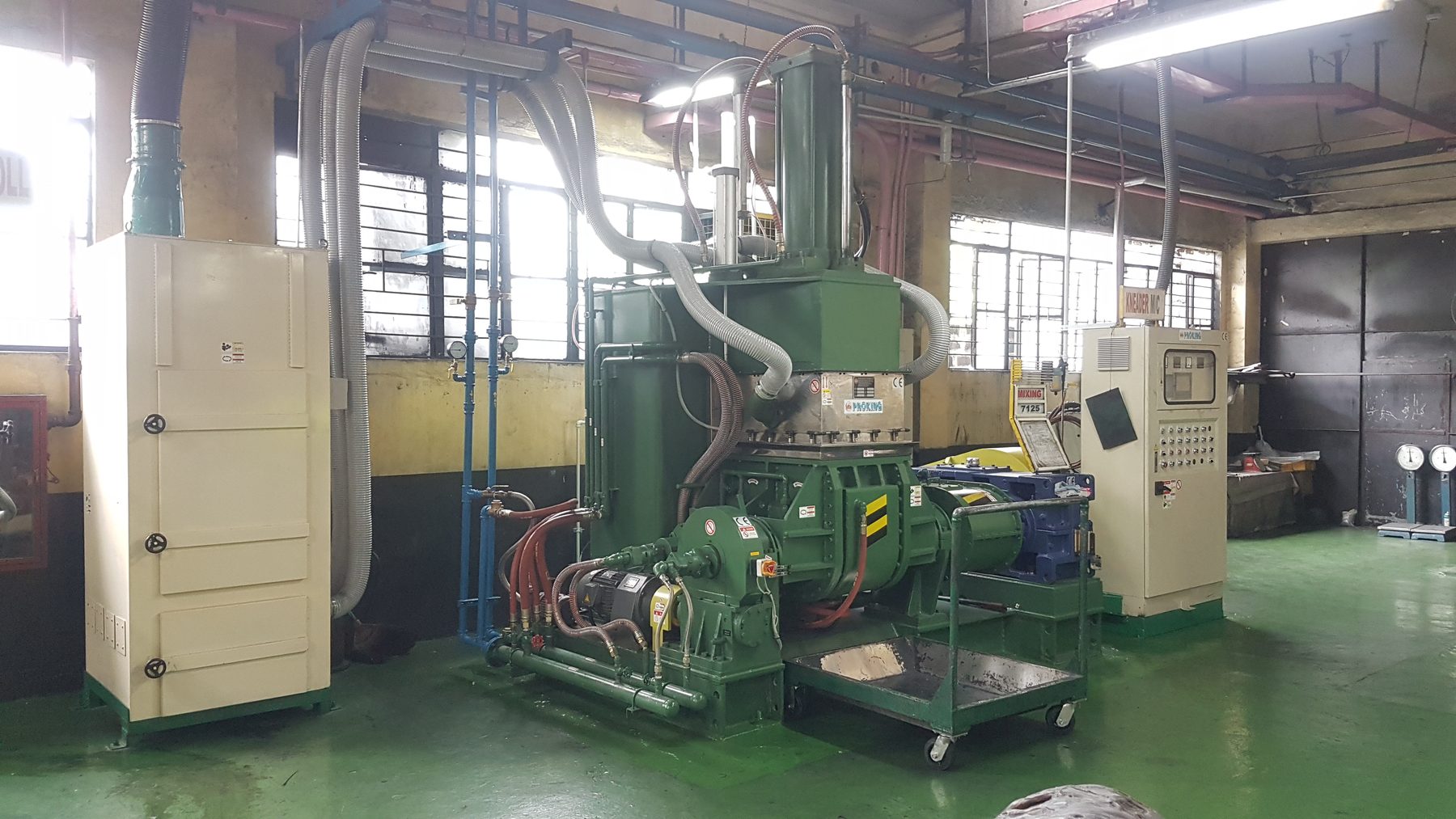
Dispersion kneader with dust collection, control panel and tilting discharge

Also called a pressurised kneader. The rotors are tangential and the chamber tilts to discharge, which makes it quicker to empty, quicker to clean, and much easier to change colour or compound between batches.

Where an internal mixer is built for throughput, a kneader is built for dispersion quality and flexibility — the usual choice for smaller batches, specialised compounds, colour work, and any shop that runs many recipes rather than one.

Specification — Dispersion Kneader
ModelMixing CapacityMain MotorTilt Motor
PX-KN-7575 L125 – 150 HP5 HP
PX-KN-110110 L175 – 200 HP7.5 HP
PX-KN-150150 L200 – 300 HP10 HP

Motor power is given as a range — the drive is specified to the compound and cycle time. Automatic temperature control across the range. Smaller and larger capacities available on request.

Key Features

  • Fast cycle — a batch mixes in minutes, sealed against material loss
  • Tilting discharge — the chamber empties completely; no scraping out
  • Automatic cooling — at the temperature limit the steam closes and the water circuit takes over
  • Compact — the practical choice where floor space is the constraint
  • Front or rear feed — specified to suit the feeding arrangement

Applications

EVA and TPR · rubber shoe soles and beach sandals · rubber rollers · tires and inner tubes · sponge and foam · O-rings, oil seals and gaskets · hose and belting · sports equipment and balls · anti-vibration rubber · PVC flooring · adhesive tape · rubber magnets · masterbatch and pigment · ink · electrical and automotive rubber parts.

Choosing

Internal mixer or kneader?

Comparison
 Internal MixerDispersion Kneader
Best forHigh throughput, few recipesDispersion quality, many recipes
DischargeDrop door, to mill belowTilting chamber
ChangeoverSlowerFast; easy colour change
FootprintLarger; usually needs a deckCompact; single floor
Capacity here75 – 168 L75 – 150 L

Both are batch machines and both discharge to an open mixing mill. If you are unsure which suits your compound and volume, send us the recipe and the target output — that is the conversation we would rather have than a specification sheet.