Rubber-Plastic Compound Line

Open Mixing Mill

Two-roll mills in nine roll sizes, 12″ to 28″. The machine that takes the batch from the mixer, works it, and sheets it out for the next stage.

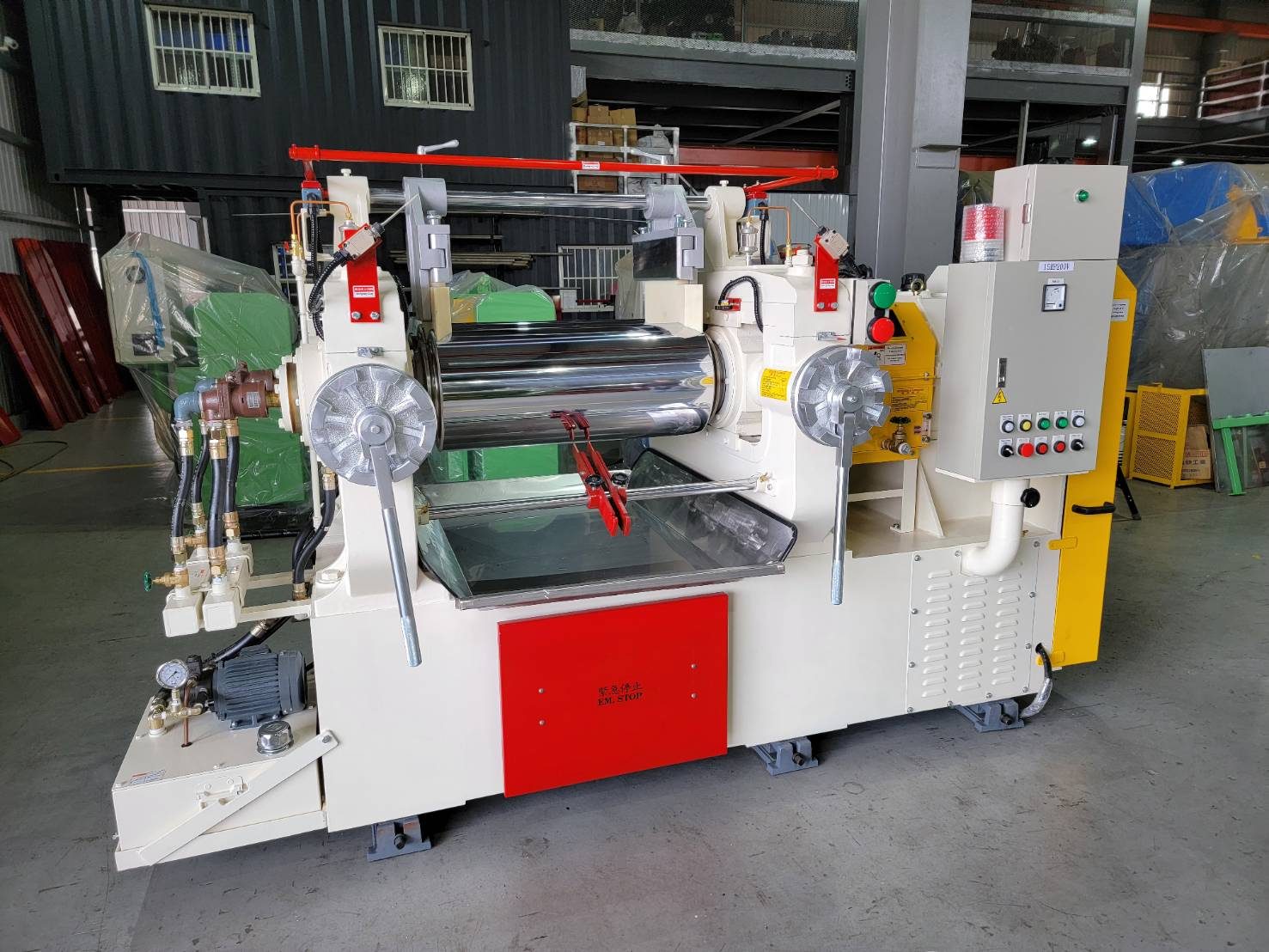
Two-roll open mixing mill with safety trip bar and operator controls

Two rolls, turning towards each other at slightly different speeds. The compound is drawn into the nip, sheared, folded back and passed through again — mixing, warming and sheeting the batch in one operation.

Open mills sit downstream of the internal mixer or kneader, but they are also used on their own for smaller batches, remilling, and colour work. Nip gap is set by the adjustment wheels on each side; the batch is worked until it is uniform, then cut off as sheet or strip.

Quick Facts
ConfigurationTwo-roll, motor driven
Roll sizes12″ × 30″ to 28″ × 90″ (9 models)
Batch capacity25 – 200 kg
Stock blenderOptional
MaterialsRubber, synthetic rubber, silicone, EVA, PVC
SafetyEmergency trip bar, brake
Specification

Nine roll sizes.

Specification — Open Mixing Mill
ModelRoll Size (Ø × L)Main MotorMixing CapacityNet WeightL × W × H (mm)
PX-OM-12x3012″ × 30″On requestOn requestOn requestOn request
PX-OM-14x3614″ × 36″30 – 40 HP25 kg6,200 kg4034 × 1600 × 1735
PX-OM-16x4216″ × 42″50 – 60 HP40 kg8,700 kg4598 × 1750 × 1770
PX-OM-18x4818″ × 48″75 – 100 HP60 kg12,500 kg5075 × 1900 × 1755
PX-OM-20x5420″ × 54″100 – 125 HP80 kg18,000 kg5680 × 2000 × 1820
PX-OM-22x6022″ × 60″125 – 150 HP100 kg21,000 kg6215 × 2100 × 1945
PX-OM-24x7224″ × 72″150 – 200 HP125 kg28,000 kg6630 × 2350 × 2100
PX-OM-26x8426″ × 84″200 – 300 HP150 kg32,500 kg7060 × 2500 × 2150
PX-OM-28x9028″ × 90″250 – 400 HP200 kg38,000 kg7700 × 2650 × 2200

Mixing capacity is per batch and varies with compound density. A stock blender can be fitted to any size to fold the sheet automatically and cut manual handling at the mill.

Photo Gallery

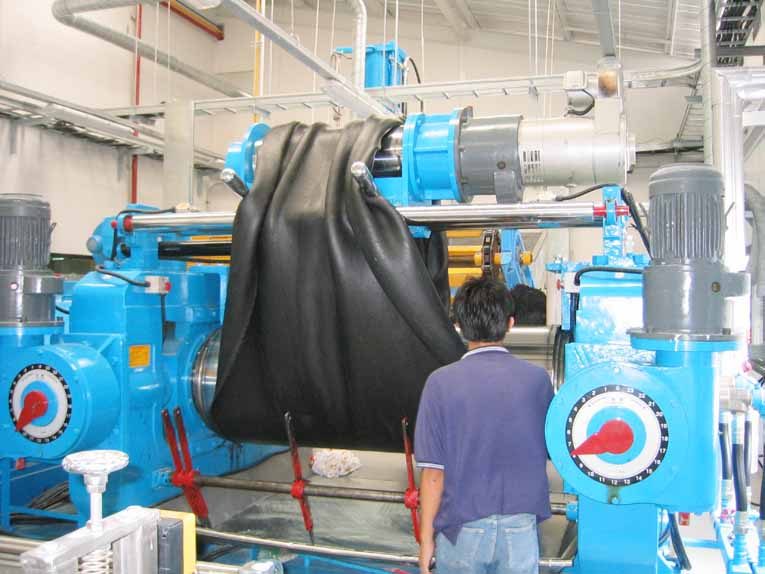
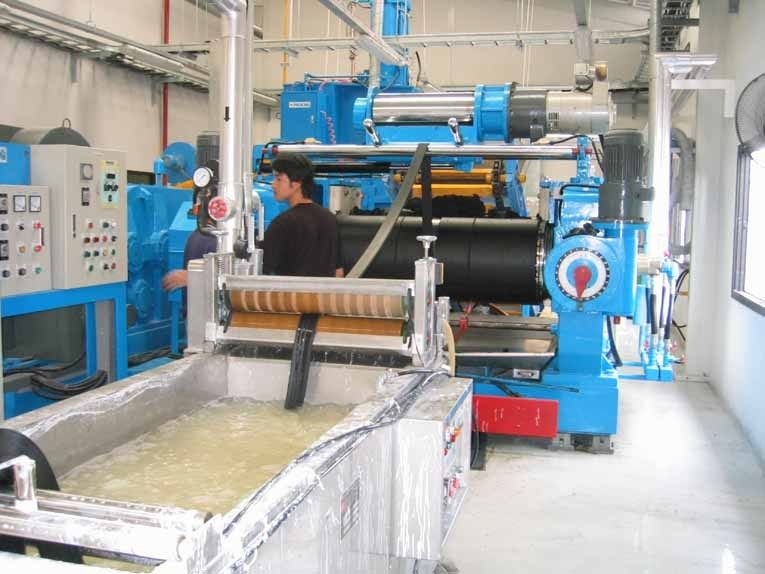
In production.

Open mixing mill working a batch of black compound
Open mixing mill with downstream sheet take-off and cooling tank

Key Features

  • Friction ratio — rolls run at different speeds; the shear between them does the mixing
  • Nip adjustment — graduated wheels on both ends, set independently
  • Cored rolls — water or steam through the roll to hold compound temperature
  • Emergency trip bar — full-width safety bar with brake, stopping the rolls on contact
  • Stock blender — optional, for automatic folding of the sheet

Where it sits

The mill is the stage after mixing. An internal mixer or kneader drops the batch onto it; the mill sheets the compound out and passes it to a batch-off cooling line, a calender, or an extruder.

It is also the machine most shops keep running independently — for remilling, warming up stock, and small-batch work that would not justify firing up the mixer.